Tool we point to — not a full product review
Turnitin AI writing detection
For teachers whose institution already provides Turnitin
Visit official website All tools we point to
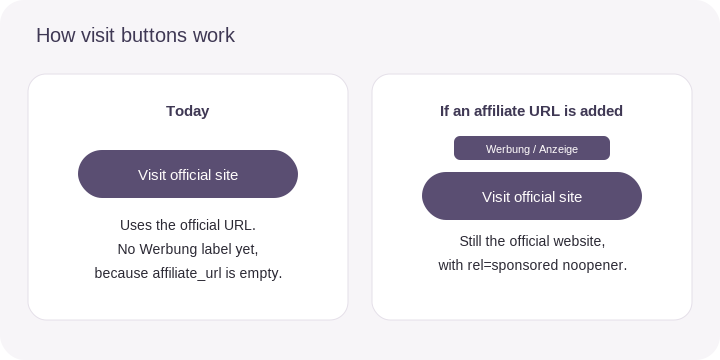
This visit button uses the official website. An affiliate_url placeholder is empty until a programme on Impact, PartnerStack or Awin is joined.
Why this site points here
Turnitin is typically available through a school, college or university, not as a simple self-serve consumer checkout. This short entry does not invent a public list price, because we did not find a clear self-serve price on the official pages we opened on 18 November 2026.
The official Turnitin blog post “Understanding false positives in Turnitin AI detection,” checked on that date, defines a false positive as incorrectly identifying fully human-written text as AI-generated. The post says Turnitin has aimed for “a less than 1% false positive rate.” That figure is a vendor claim, not a test by this site. The same post is careful to add that the false-positive rate “is not zero.”
Most important for teachers: Turnitin writes that it “does not make a determination of misconduct,” including in the AI-writing setting, and that the instructor needs to apply professional judgment, knowledge of the students, and the assignment’s context. Its published tips include planning for false positives, assuming positive intent, and being open and honest that a false positive can occur.
When this official site may help
- Your institution already provides Turnitin, and you need official language on false positives before a conversation with a student.
- You are writing a course policy and want vendor guidance that a score is not a misconduct decision.
Limits to keep in mind
- Access is typically institutional; this site found no clear public self-serve list price on the official pages we opened.
- The “less than 1% false positive rate” figure on the official blog is a vendor claim, and the same blog says the rate is not zero.
- Turnitin itself says it does not determine misconduct.
What the official site itself warns
Turnitin’s official blog says it “does not make a determination of misconduct,” and that because “our false positive rate is not zero, you as the instructor will need to apply your professional judgment, knowledge of your students, and the specific context surrounding the assignment.” Its published tips include assuming positive intent and being open that a false positive may occur.
Official source: https://www.turnitin.com/blog/understanding-false-positives-within-our-ai-writing-detection-capabilities · checked on 2026-11-18
Hands-on testing notes
To be filled after hands-on test.
This site does not claim to have used the product until this box is filled in by a person after a real test.
Frequently asked questions
Can a Turnitin AI flag by itself prove misconduct?
Not according to Turnitin’s official blog, which says the company does not make a determination of misconduct and that instructors must apply professional judgment because the false-positive rate is not zero.
Guides that give this entry context
- How teachers can use results fairly — Treat a flag as a prompt for professional judgement, not a misconduct decision. Official sources say the score should not stand alone.
- If you are falsely flagged — Stay calm, keep your drafts, read the policy, and ask for a conversation. A score is not proof, and official sources say it should not stand alone.
- Why false positives happen — A false positive is human writing flagged as AI. Research and official vendor pages show this can happen, including for some non-native English writing.
Official pages used for this entry
These citation links always use the plain official URL, even after an affiliate visit button is added.